From 1% to 27%: How RSS/NERC Paved the Road for Jordan’s Renewable Energy Revolution
Jordan is currently witnessing a historic energy transformation. In just a decade, we have shifted from a near-total reliance on imported energy to a reality where 27% of our electricity is generated from our own sun and wind. As we celebrate Clean Energy Day, it is important to reflect on the institutional journey that made this possible.
At the Royal Scientific Society/National Energy Research Centre (RSS/NERC), we don't just view this 27% as a statistic; we view it as the culmination of decades of technical persistence, the policy and strategic contributions and leadership of Ministry of Energy and Mineral Resources, and integration of the efforts of all private and public stakeholders.
Long before the global "green boom", RSS/NERC was already laying the groundwork for Jordan’s energy independence. With our establishment dating back to the 1970s, we have consistently served as the technical bridge between national policy and effective implementation.
RSS/NERC paved the road for the development of Jordan’s Green Economy by acting as Jordan’s primary energy technical institution. Our contribution is built on four pillars of long-standing expertise:
- Pioneering Resource Assessment: We didn't wait for the market to mature. RSS/NERC was the first to map Jordan’s wind and solar potential, installing the measurement masts and weather stations that proved the "bankability" of our national resources to international investors.
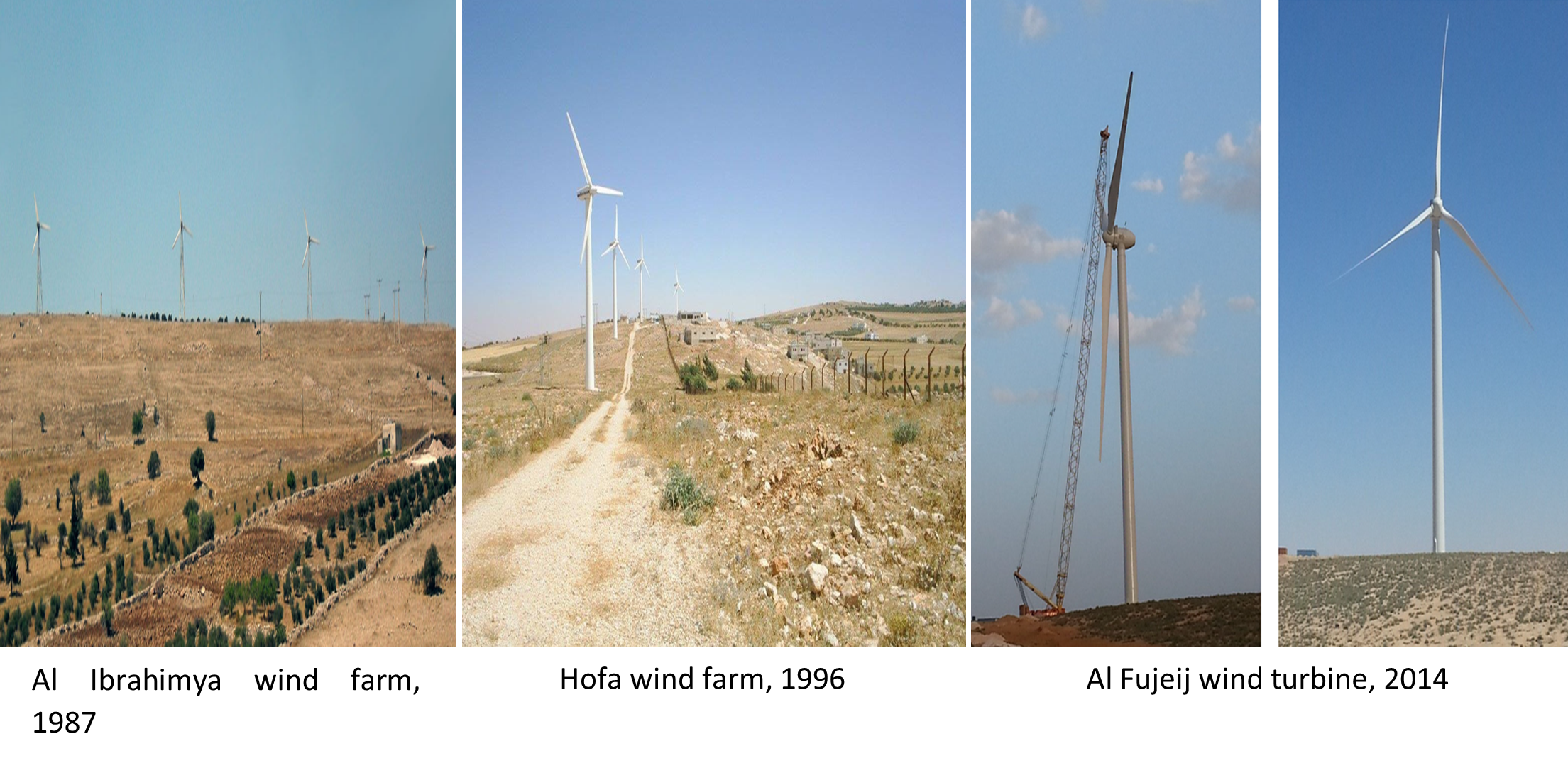
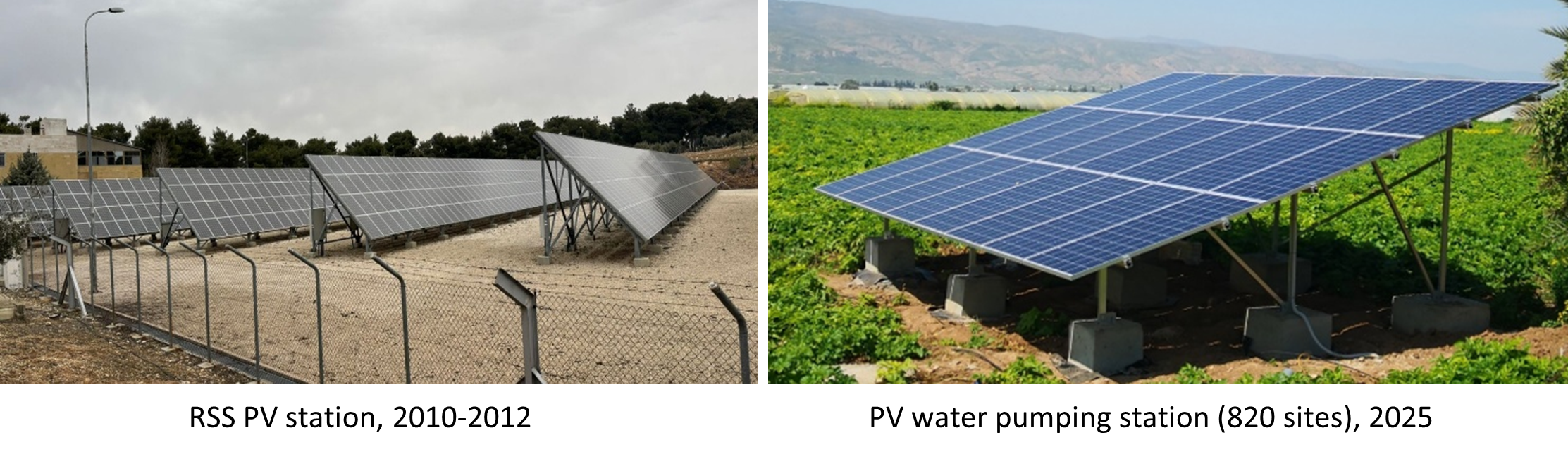
- Technical Leadership: Our long experience in engineering and consultancy has supported the deployment of massive renewable projects. RSS/NERC designed and manufactured the first Jordanian Solar Water Heater (SWH) for domestic water heating using local materials in 1973, this technology was transferred to the local manufacturers. Nowadays, the distribution of the Jordanian SWH in households is about 15%. The first small scale PV panels project in Jordan was implemented by RSS/NERC in the mid-80s. We paved the road for the Jordan’s wind industry by participating in the erection of Jordan’s very first wind farms at Al Ibrahimya (1987) and Hofa (1996), and the first commercial scale wind turbine was implemented in 2014 by RSS/NERC. During the last decade, RSS/NERC participated in developing more the 200 MW of PV projects across Jordan, RSS/NERC has been the steady hand ensuring technical excellence.
- Energy Efficiency: Recognizing that energy efficiency comes first, we introduced the concept to Jordan in 1980 with our "Solar House", which demonstrated a 60% reduction in energy consumption through using passive and active solar systems. RSS/NERC has played a critical and sustained role in supporting multiple sectors to improve their energy utilization. In quantitative terms, RSS/NERC has supported energy efficiency evaluation and assessment activities in more than 110 industrial facilities, approximately 315 commercial and public buildings, over 150 residential buildings, and more than 20 water-pumping stations. Beyond technical interventions, RSS/NERC has also been instrumental at the policy and strategic planning level, both nationally and regionally, through the development of key strategies and action plans, including the National Cooling Strategy and Action Plan of Jordan, support to municipalities through the preparation of 12 Sustainable Energy and Climate Action Plans (SECAPs), and technical assistance for the development and implementation of the National Energy Efficiency Action Plans (NEEAPs). Through this integrated approach—combining on-the-ground technical support with policy and planning expertise—RSS/NERC has strengthened energy efficiency governance and supported Jordan’s transition toward a more efficient, resilient, and sustainable energy system.
- Infrastructure for Innovation: With 44 specialized and nationally and internationally accredited laboratories of RSS including energy laboratories, we provided the quality assurance framework that allowed us to support this achievement.
The road from 1% to 27% was paved with research, knowledge, continuous government support and leadership, and a deep understanding of Jordan’s unique landscape. However, our work is far from over. As we look toward the national goal of 31% by 2030, RSS/NERC will continue to lead through innovation—integrating Green Technologies and Smart Grid solutions.
We are very proud to be the Engine of Transition, this achievement belongs to every Jordanian, and it is a testament to what can be achieved when the National Vision is supported by decades of scientific and technical expertise.
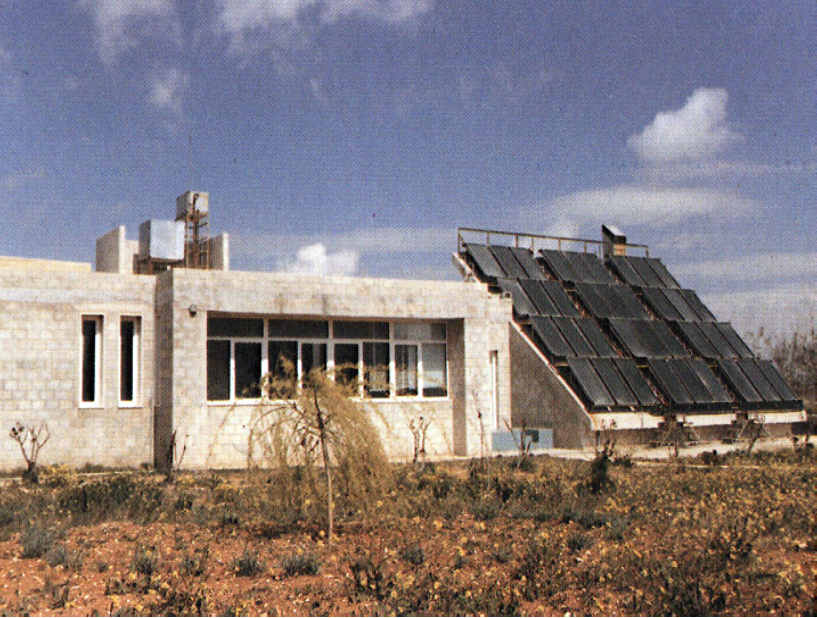
The Solar House at RSS/NERC, 1980